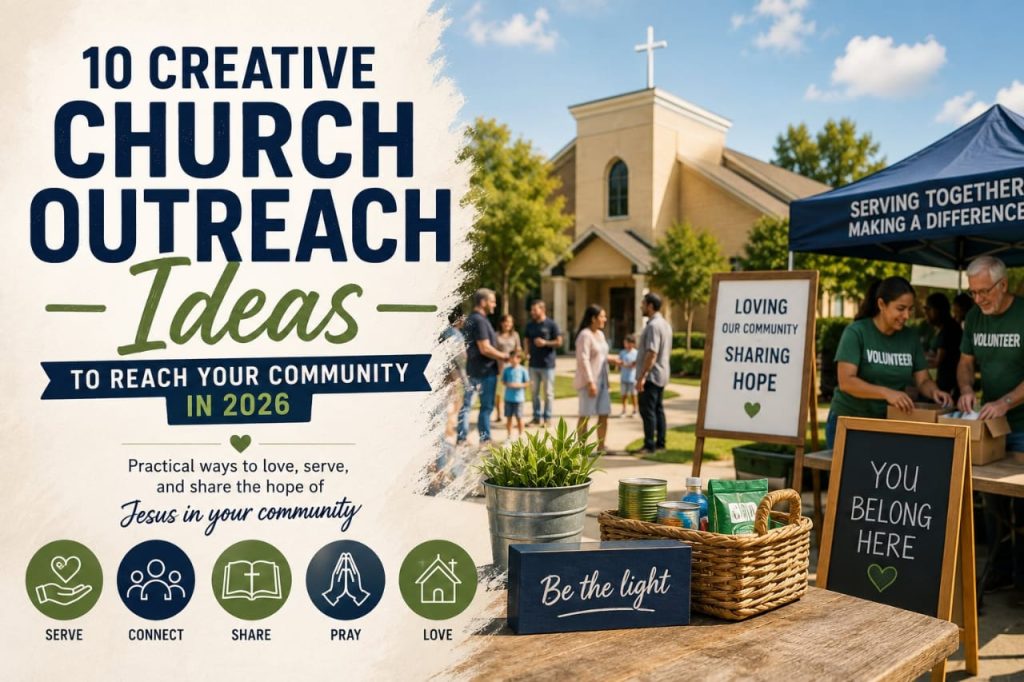
Every pastor knows the feeling. Sunday morning comes, the doors open, and you look out at rows of familiar faces — but the seats that should be filled with new visitors stay empty. Outreach isn’t about running more programs. It’s about building genuine bridges into the community God has already placed around your church.
The good news is that outreach doesn’t have to be complicated or expensive. Some of the most effective ideas are simple, repeatable, and rooted in relationship rather than performance. Here are ten creative ways your church can reach your community in 2026.
1. Neighborhood Prayer Walks
Instead of only praying for your community from inside the sanctuary, take small teams out to walk the streets around your church. Pray over homes, businesses, and schools by name. This builds spiritual burden in your congregation and often opens natural doors for conversation with neighbors who are curious about what you’re doing.
2. Host a Community Meal Night
A recurring free meal — monthly or weekly — removes almost every barrier to entry. No sermon, no pressure, just a table and good food. Over time, these meals become a trusted gathering point where relationships form organically, and where invitations to church feel like an extension of friendship rather than a sales pitch.
3. Partner With Local Schools
Offer to supply school kits, volunteer for reading programs, or provide meals for teacher appreciation weeks. Schools are often under-resourced and open to help. This kind of quiet generosity builds long-term trust with families who may never have considered stepping into a church otherwise.
4. Launch a Digital Invitation Campaign
Outreach today happens online just as much as it does on the sidewalk. Short video testimonies, shareable social posts, and simple invite links give your congregation an easy way to invite friends without feeling awkward. Many churches have found that pairing a physical invitation with a digital resource dramatically increases response. Tools like the ones found at TrueLife.org give members a low-pressure way to start spiritual conversations by pointing people to real answers on the questions they’re already asking.
5. Equip Every Member, Not Just Staff
Outreach stalls when it’s treated as a program run by a handful of volunteers. It grows when the whole congregation sees themselves as participants. Give people simple, repeatable tools — an invitation card, a short script, a link to share — so outreach becomes a weekly habit instead of an occasional event.
6. Serve First Responders and Essential Workers
Deliver coffee to the local fire station, write encouragement notes for hospital staff, or organize an appreciation lunch for police officers. These small acts of honor open doors with people who serve the community daily but are rarely thanked publicly.
7. Create a Grief and Life-Transition Support Ministry
Divorce, job loss, and bereavement are seasons when people are most open to spiritual conversation — yet churches often only respond after someone reaches out. Proactively offering a support group or a simple care package for people walking through hard seasons meets a felt need before it’s even asked for.
8. Run a Skills-Sharing Workshop Series
Invite members with professional expertise — financial planning, resume writing, home repair, parenting — to teach free community workshops. These events position the church as a resource hub rather than only a religious institution, and they draw people who might never attend a worship service but will attend a practical class.
9. Host a Backyard or Small Group Outreach Night
Not every outreach event needs to happen on church property. Encourage members to host a simple backyard gathering with neighbors — food, conversation, maybe a short testimony. These low-key environments often lead to deeper spiritual conversations than a formal church service ever could.
10. Build a Consistent Follow-Up System
The outreach event is only half the equation. Churches that see lasting growth are the ones with a clear plan for following up with visitors and first-time guests within 48 hours. A phone call, a handwritten note, or a personal invitation to coffee communicates that the person matters beyond the initial contact.
Turning Ideas Into a Sustainable Outreach Culture
The churches that see the most lasting fruit from outreach aren’t necessarily the ones with the biggest budget or the flashiest events. They’re the ones that build outreach into the rhythm of church life — something every member does, not something a committee handles a few times a year.
If you’re a pastor looking to build that kind of culture in your own congregation, it helps to have a proven framework rather than starting from scratch. TrueLife.org’s resources for pastors walk church leaders through practical, biblically grounded strategies for turning ordinary members into confident, everyday evangelists — the kind of foundation that makes outreach ideas like these actually stick long after the initial excitement fades.
Outreach in 2026 doesn’t require reinventing your church’s approach to ministry. It requires consistency, genuine care for your neighbors, and a willingness to meet people exactly where they are. Start with one or two ideas from this list, build momentum, and let your congregation’s love for the community do the rest.