For thousands of years, humanity has looked upward, not merely to witness the shifting canvas of the night sky, but to seek a mirror for the human experience. Whether through the lens of ancient desert nomads, temple priests, or scholars of the Vedas, the stars have consistently been interpreted as a “language”—a silent, celestial script that speaks to our archetypal nature. Understanding this language isn’t about predicting the future with mechanical certainty; it is about recognizing the rhythmic patterns that connect our inner lives to the universe at large.
The Universal Impulse to Seek Meaning
Long before modern science, ancient civilizations developed sophisticated systems to map the heavens. To these early observers, the sky was a book. The movement of the Sun, Moon, and planets was perceived as a divine clockwork that didn’t just mark the passage of time, but signaled the qualities of those moments.
In biblical traditions, the heavens are often described as declaring the “glory of God,” serving as signs for seasons and cycles. Similarly, in the ancient Vedic tradition, the sky is known as Jyotish—the “science of light.” Both perspectives share a foundational belief: that there is a profound order to existence and that this order can be deciphered by those who know how to read the symbols.
Archetypes: The Common Threads of History
At the core of these diverse traditions lie archetypes—universal symbols that resonate across cultures. The “Lion” as a symbol of power and nobility, the “Bull” as a symbol of endurance and earthly grounding, or the “Eagle” as a figure of higher vision—these are not just random associations. They are archetypal energies that appear in ancient texts, mythology, and even the structural layout of the zodiac.
When we explore these symbols, we aren’t just looking at history; we are looking at a shared psychological blueprint. We see that whether someone was reading the constellations in the Middle East or mapping the Nakshatras in ancient India, they were observing the same human traits: struggle, ambition, love, and the search for spiritual purpose. These symbols provide a framework that allows us to step back from the chaos of daily life and see the broader themes of our existence.
Finding Personal Clarity in Ancient Systems
In our fast-paced modern world, the connection to these celestial rhythms has often been lost. We have become disconnected from the cycles that once informed our ancestors’ decision-making. However, many are finding that returning to these ancient systems provides a sense of grounding and perspective that modern analytical tools sometimes lack.
When you seek to understand these archetypal influences, you are not just looking at the stars; you are looking at yourself. For those curious about how these ancient symbolic frameworks can apply to personal growth and self-reflection, the path of discovery is often personal. Some might turn to historical research, while others seek out tools that bridge the gap between tradition and technology.
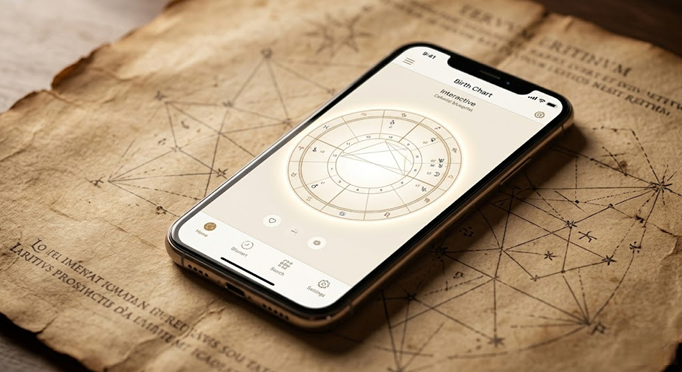
If you are looking to explore these patterns within your own life, you might consider utilizing a free astrology chat to ask questions about the archetypal influences present in your own journey. Platforms like Astroma.co aim to bridge this gap, allowing you to move beyond abstract theory and see how these ancient principles might offer clarity on your current path. This type of self-inquiry can act as a catalyst for deeper understanding, helping you reconcile your personal challenges with the timeless themes of the human journey.
The Role of Celestial Mapping
Whether we speak of the Mazzaroth in ancient Hebrew texts or the complex planetary dashboards of Vedic astrology, the objective remains similar: to provide a “road map” for the human soul. These systems suggest that our lives are not unfolding in a vacuum. By understanding the archetypal influences at play—much like understanding the weather before starting a long journey—we can navigate our personal challenges with greater patience and insight.
This is why the “language of the stars” remains relevant. It is a language of empathy. It reminds us that our anxieties, our triumphs, and our search for meaning are shared experiences, echoed by the constellations that have watched over every generation since the dawn of time.
Frequently Asked Questions (FAQ)
1. Is astrology a form of fortune-telling? Traditional systems like Vedic astrology are generally not viewed as fortune-telling. Instead, they are considered analytical frameworks used to understand the “karmic” patterns or influences that might be affecting a person’s life, helping them make more informed decisions.
2. Why do different traditions interpret the stars differently? Different cultures developed their systems based on their unique geographical perspective, religious context, and cultural values. While the symbols often overlap, the application of these symbols varies to suit the spiritual or practical goals of that specific tradition.
3. Can ancient celestial wisdom be reconciled with modern life? Yes. Many people use these ancient archetypes as a tool for self-reflection. By viewing life events through the lens of traditional symbols, individuals often find a new way to frame their experiences, leading to greater self-awareness and peace of mind.
4. How do I start learning about these traditions? Start by identifying which system resonates with your curiosity. If you are interested in the structured, ancient approach to celestial mapping, research the basics of Vedic archetypes. Engaging with experts or using dedicated platforms can provide a deeper, more structured understanding of these complex subjects.
5. Are archetypes relevant if I don’t believe in astrology? Absolutely. Even from a psychological perspective—as championed by figures like Carl Jung—archetypes are powerful tools for understanding the collective human psyche. You don’t need to believe in the influence of the stars to find value in the symbolic stories they represent.