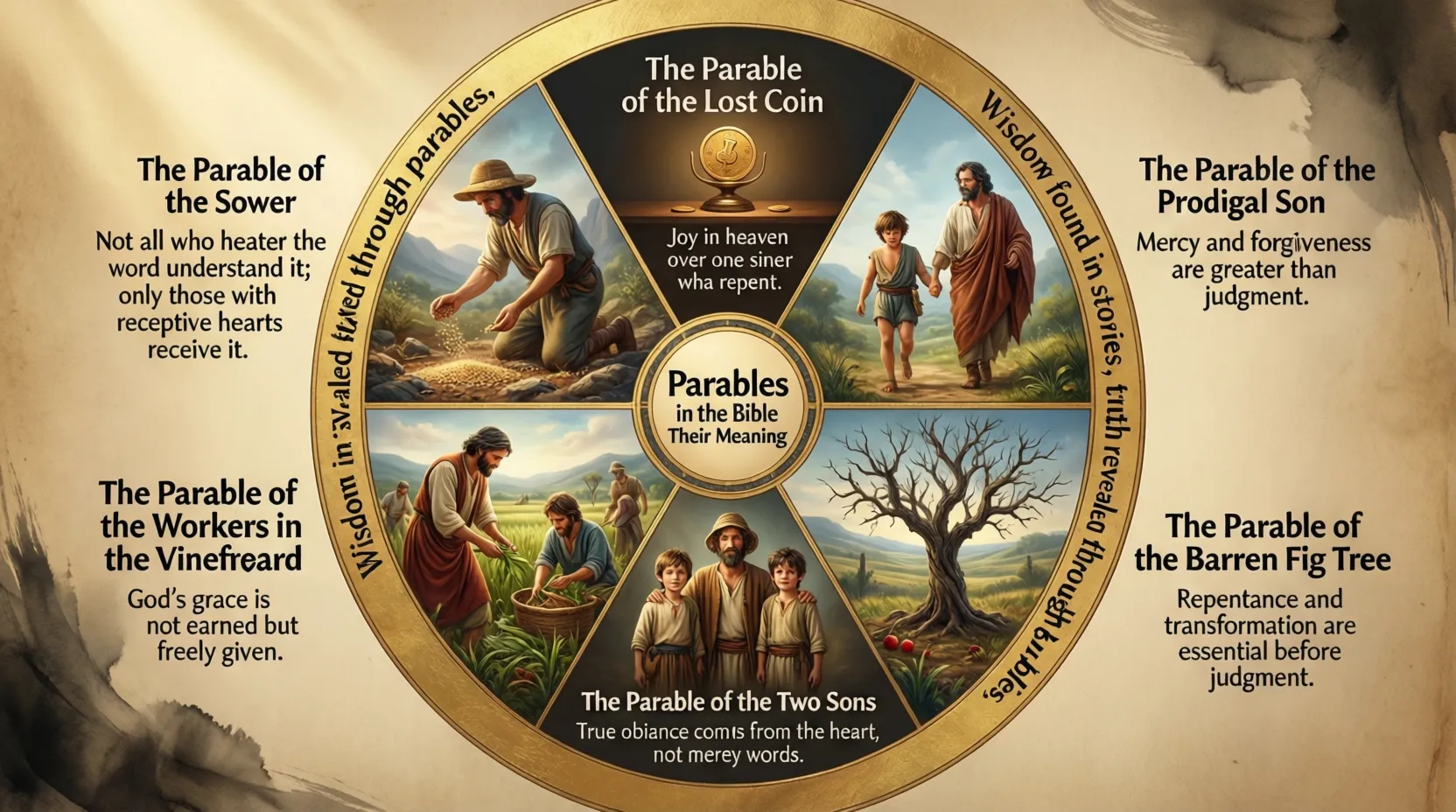
Parables in the Bible and Their Meaning humein Allah ke paighaamaat ko gehrai ke sath samajhne ka behtareen zariya deti hain. Bible ki parables sirf kahaniyan nahi hoti, balkay yeh roohani sachaiyon ko simple examples ke zariye dil tak pohanchati hain.
Jab hum in parables ko parhtay hain, to humein apni zindagi, imaan, aur Allah ke sath rishtay par sochnay ka mauqa milta hai. Yesu Masih ne parables ka istemal is liye kiya taake har shakhs, chahe wo aam ho ya alim, khuda ki baat ko asaani se samajh sakay.
Is article mein hum Bible ki mashhoor parables aur unke meaning ko explore karain gay, taake aap apni roohani journey mein rehnumai aur himmat hasil kar saken.
Biblical Meaning of Parables in the Bible
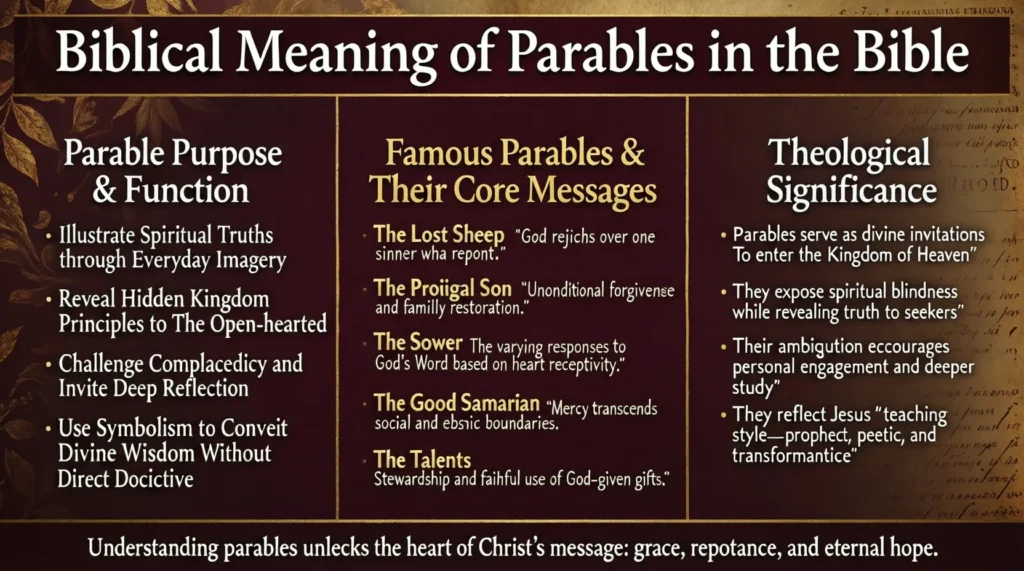
In the Bible, parables are simple stories with a deep spiritual meaning. Jesus used them to explain the Kingdom of God in a way that ordinary people could understand.
The word “parable” means to place alongside. Jesus placed spiritual truth alongside daily lifefarming, family, work, loss, and joy.
Why Did Jesus Use Parables?
The Bible gives us a clear answer:
“Jesus spoke all these things to the crowd in parables; he did not say anything to them without using a parable.” (Matthew 13:34)
Parables served two purposes:
- To reveal truth to those seeking God with open hearts
- To challenge those who heard but did not want to understand
This does not mean God hides truth unfairly. It means truth is received best by humble hearts.
Examples of Key Parables and Their Meaning
The Parable of the Sower (Matthew 13:3–9)
This parable shows how people receive God’s Word. The seed is the Word of God, and the soil is the heart.
- Good soil means a heart ready to obey
- Rocky or thorny soil shows distraction, fear, or lack of faith
Its message is clear: how you receive God’s Word matters.
The Parable of the Good Samaritan (Luke 10:30–37)
This story teaches that love is not limited by race, status, or background. True Christian faith shows compassion through action.
It reminds us that loving our neighbor is central to God’s heart.
The Parable of the Prodigal Son (Luke 15:11–32)
This parable reveals God’s mercy. No matter how far someone strays, God is ready to forgive when they return.
It speaks of repentance, grace, and unconditional love.
Positive and Warning Meanings
Many parables bring hopeGod’s forgiveness, growth, and eternal life.
Others carry warningsabout pride, greed, and ignoring God’s call.
Together, they guide believers toward faith, obedience, and spiritual maturity.
Spiritual Significance and Symbolism
Beyond their surface stories, parables carry strong spiritual symbolism. Each character, action, and outcome reflects a deeper truth about God and our relationship with Him.
Parables often symbolize:
- God’s Kingdom growing quietly but powerfully
- Human hearts responding differently to truth
- Choices that lead to life or loss
For example, the mustard seed represents small faith growing into great strength. The lost coin and lost sheep show how deeply God values every soul.
Spiritually, parables teach us that:
- God speaks in ways we can understand
- Growth often starts small
- Obedience matters more than knowledge
Many believers experience personal transformation by reflecting on parables during prayer. A story heard many times can suddenly feel new when the Spirit opens the heart.
Parables invite us to ask, “Where am I in this story?”
That question alone can lead to spiritual awakening and deeper trust in God.
Biblical Interpretations in Dreams or Real Life
Sometimes, parables come to mind during dreams, prayer, or real-life moments. You may dream of seeds, vineyards, banquets, or lost items. These images often echo biblical parables.
A peaceful dream reflecting a parable may suggest:
- God’s reassurance
- Spiritual growth
- A call to trust His timing
A troubling or warning dream may point to:
- Neglected faith
- Distraction from God’s Word
- A need for repentance or change
In real life, God may use situationshelping a stranger, forgiving someone, waiting patientlyto remind you of a parable’s message.
The key is prayer. Ask God what He is teaching you. Parables are not meant to confuse but to draw you closer to Him.
Practical Lessons & Faith Insights
Parables teach us to listen with the heart.
They remind us to love deeply, forgive freely, and trust God fully.
Through prayer and reflection, these stories become personal guidance, not just Bible knowledge.
Let God’s Word shape your actions, not just your thoughts.
Conclusion
The parables in the Bible and their meaning reveal God’s heart in simple yet powerful ways. Through everyday stories, Jesus speaks eternal truth, offering guidance, correction, and hope. When you read or remember a parable, pause and listen.
God may be speaking directly to your journey. Trust Him, seek understanding through prayer, and allow His wisdom to grow quietly within youjust like a seed planted in good soil.
Discover More Articles
- Sparrow Meaning in the Bible: Faith, Worth & Hope (2026)
- Exile Meaning in the Bible : A Season of Loss, Hope & Return
- Fruit Meaning in the Bible : Spiritual Symbolism & Divine Lessons