Mammon Meaning in the Bible is more than just a word about money it carries a powerful spiritual warning that still speaks to our hearts today. Many people hear the term “mammon” and simply think of wealth, but in Scripture, it represents something much deeper.
It reveals the struggle between serving God and serving material possessions. When Jesus said, “You cannot serve God and mammon,” He was addressing the condition of the heart, not just financial status.
Understanding this meaning helps us examine our priorities, desires, and trust. In this article, I’ll explain what mammon truly means in the Bible and why its message remains so relevant for believers today.
Mammon in the Bible: Meaning, Definition, and What Scripture Really Says
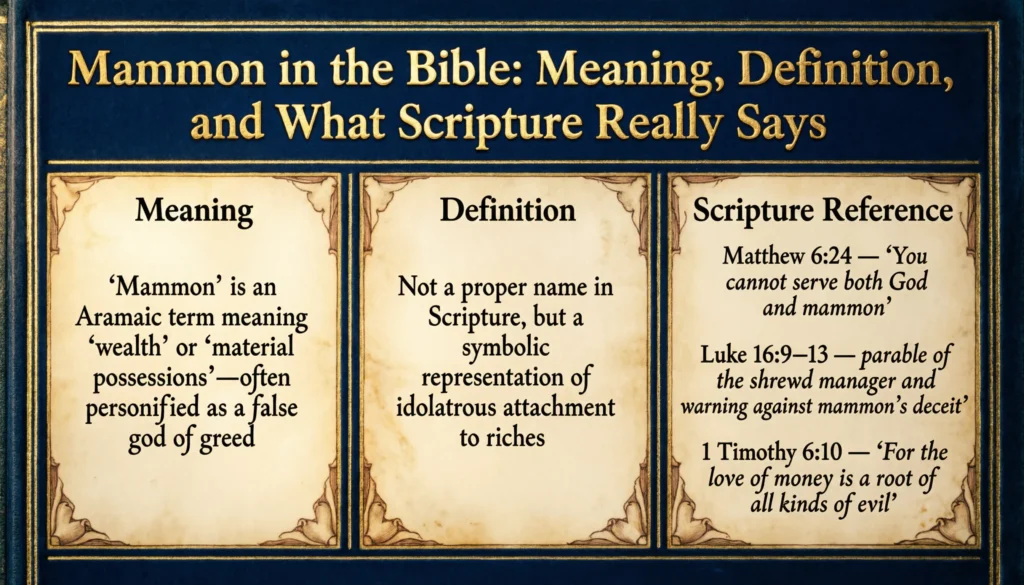
If you’ve ever wondered, “What is mammon in the Bible?” or “What does mammon mean in Hebrew and Greek?” you’re not alone. The word mammon appears in powerful teachings of Jesus and carries deep spiritual meaning.
Many people ask whether mammon is money, a demon, a false god, or simply wealth itself. In this article, we will clearly explain the biblical definition of mammon, its Aramaic and Hebrew meaning, what the KJV Bible verse says about mammon, and what it represents spiritually.
What Is Mammon in the Bible?
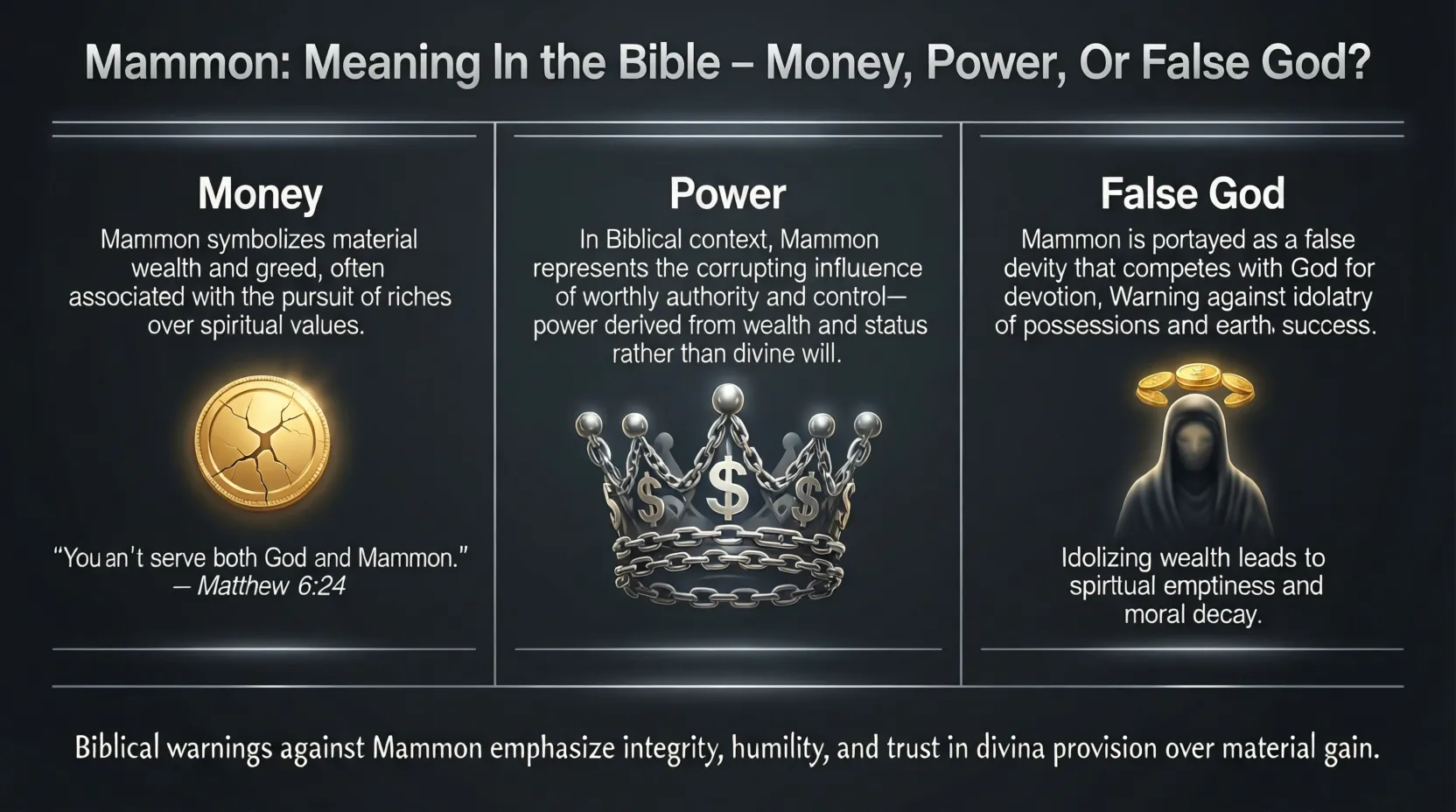
In the Bible, mammon refers to riches, wealth, or material possessions especially when they become a person’s master.
The word appears in:
- Matthew 6:24 (KJV)
“No man can serve two masters… Ye cannot serve God and mammon.” - Luke 16:13 (KJV)
“Ye cannot serve God and mammon.”
Here, Jesus teaches that a person cannot serve both God and wealth at the same time. Mammon represents money or riches when they take the place of God in someone’s heart.
So, the simple biblical definition of mammon is:
Mammon means wealth or riches that are trusted in or worshiped instead of God.
Mammon Meaning in Hebrew, Aramaic, and Greek
Many people search for “Mammon Hebrew meaning” or “Mammon Aramaic meaning.” Let’s clarify.
- The word mammon comes from the Aramaic word “māmōnā.”
- It means riches, wealth, possessions, or property.
- In Greek New Testament manuscripts, it appears as “mamōnas.”
Although people often ask about the Hebrew meaning of mammon, the word itself is not originally Hebrew. However, Hebrew uses similar words related to wealth and possessions.
So biblically speaking:
- Mammon (Aramaic) = Wealth or riches
- Mammon (Greek form) = Riches personified as a master
What Does Mammon Represent Spiritually?
Spiritually, mammon represents materialism, greed, and misplaced trust in money.
Jesus did not say that money itself is evil. Instead, He warned against serving money. When wealth controls a person’s decisions, priorities, and faith, it becomes a spiritual master.
This is why some call mammon a “spirit of greed” or a symbol of worldly systems built on money.
In short:
- Mammon symbolizes trusting riches instead of God
- It represents self-sufficiency without God
- It warns against loving money more than righteousness
Is Mammon a Demon or a Syrian God?
Some people search for terms like:
- Mammon demon
- Mammon Syrian god
- Who was mammon in the Bible?
The Bible itself does not describe mammon as a demon or specific god. Scripture simply presents mammon as wealth personified.
However, in later Christian writings and medieval literature, mammon was sometimes described as a demon of greed. That idea does not come directly from the Bible but from later traditions.
Biblically:
Mammon is not named as a demon — it is a representation of wealth as a rival master to God.
What Does the Bible Say About Mammon?
The Bible clearly teaches:
- You cannot serve both God and mammon.
- Wealth can compete with your devotion to God.
- True security comes from God, not money.
Luke 16 also talks about the “unrighteous mammon,” reminding believers to use worldly wealth wisely and faithfully.
The message is not that money is sinful, but that money must never replace God in your heart.
Mammon Symbol Meaning
Symbolically, mammon represents:
- Greed
- Materialism
- Worldly power
- Financial obsession
- False security
In modern times, mammon can represent a lifestyle where success, status, and wealth matter more than faith and obedience to God.
What Is the Meaning of Mammon Today?
Today, mammon can describe:
- Loving money above everything
- Making financial success your ultimate goal
- Trusting wealth more than God
The Bible calls believers to seek first the Kingdom of God (Matthew 6:33), not to chase riches as their master.
Biblical Meaning of Mammon
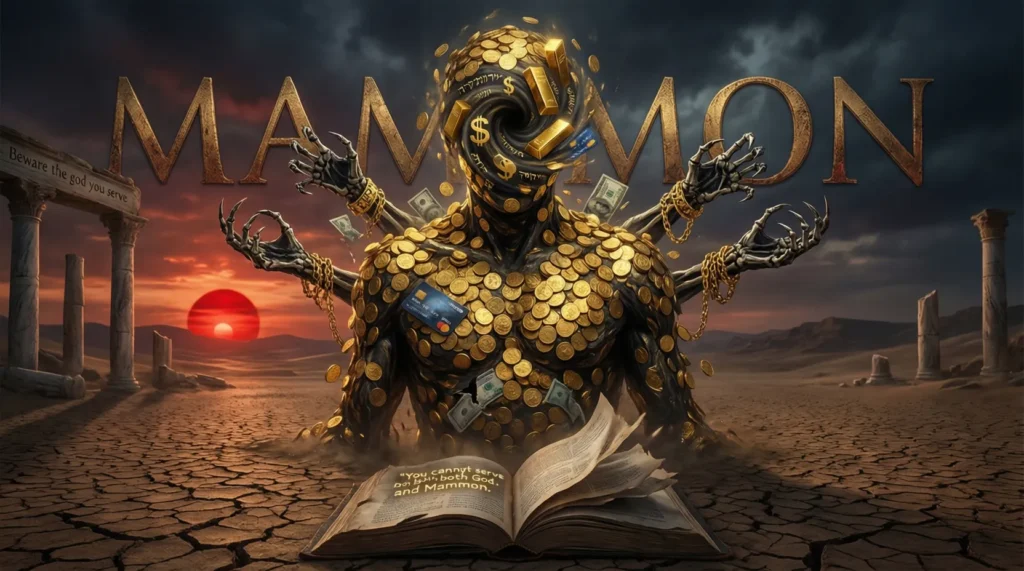
The word Mammon comes from an Aramaic term meaning riches, wealth, or possessions.
But in the Bible, Mammon is more than money.
It represents trust placed in wealth instead of God.
Jesus gives the clearest teaching in:
“No one can serve two masters… You cannot serve God and Mammon.”
(Matthew 6:24)
Here, Mammon is treated like a master something that can rule the heart.
What Mammon Represents in the Bible
Biblical symbolism shows Mammon as:
- Dependence on money for security
- Fear of lack controlling decisions
- Greed replacing gratitude
- Wealth becoming an idol
Money itself is not evil.
The Bible never says money is sinful.
But when money becomes your source of peace, identity, or power, it turns into Mammon.
Another strong warning appears in:
“For the love of money is a root of all kinds of evil.”
(1 Timothy 6:10)
Notice the focus is not money but love of money.
Positive vs. Warning Meaning
Positive Biblical View
- Wealth can be a blessing from God
- Money can be used for good works and generosity
- God provides resources for His purposes
Warning Meaning of Mammon
- Wealth can replace trust in God
- Fear of loss can weaken faith
- Greed can harden the heart
Mammon becomes dangerous when it competes with God for your loyalty.
The Bible’s message is clear:
God wants your heart, not just your obedience.
Spiritual Significance and Symbolism
Spiritually, Mammon symbolizes a divided heart.
It reflects the inner battle between faith and fear.
When Mammon controls us:
- We worry constantly
- We chase more but feel empty
- We fear loss more than we trust God
But when God is first:
- Peace replaces pressure
- Contentment grows
- Faith feels lighter
Mammon and the Heart
Jesus said:
“Where your treasure is, there your heart will be also.”
(Matthew 6:21)
This verse shows the deep spiritual symbolism of Mammon.
Whatever you trust most becomes your treasure.
Mammon whispers:
- “You are safe because of money.”
- “You are valuable because of success.”
- “You will be okay if you have more.”
God whispers:
- “I am your provider.”
- “I am your security.”
- “I am enough.”
A Daily Faith Connection
You may see Mammon’s influence when:
- Anxiety rises over finances
- Prayer fades during prosperity
- Giving feels painful
- Faith weakens under pressure
This is not condemnation.
It is a loving invitation to realign your trust.
Mammon reveals where healing, surrender, and spiritual growth are needed.
Biblical Interpretations in Dreams or Real Life
Some believers encounter Mammon through dreams, thoughts, or life situations.
In Dreams
Dreams involving:
- Losing money
- Chasing wealth
- Feeling trapped by riches
Often symbolize:
- Fear of lack
- Over-dependence on material things
- A call to trust God more deeply
If the dream feels stressful, it may be a gentle warning.
If it ends with peace or release, it may reflect spiritual freedom.
In Real Life Experiences
You may notice Mammon’s presence when:
- Work replaces prayer
- Success feels empty
- Fear drives decisions
- God feels distant during prosperity
The Bible encourages prayer during these moments.
God does not shame He restores.
Ask:
“Lord, where is my trust today?”
That simple prayer brings clarity and peace.
Practical Lessons & Faith Insights
- Put God first in trust, not just words
- Pray over financial fears
- Practice gratitude and generosity
- Remember God is your true provider
Let money serve God never replace Him.
Conclusion
The Mammon meaning Bible teaches us a powerful truth:
You cannot find peace in wealth alone.
Mammon is not just money it is misplaced trust.
God calls you back to freedom, faith, and rest.
When you choose God as your source, fear loses its grip.
May your heart find peace in His presence, and may your faith grow stronger as you trust Him fully today and always.
Discover more articles
- Incarnation Meaning in the Bible | God Becoming Flesh (2026)
- Omega Meaning in the Bible | God’s Eternal Ending & Promise
- Signs of the Times Meaning Bible : What God Is Revealing (2026)