I know many of you have wondered about the Fasting Meaning in the Bible, and today I want to explore it with you.
Fasting isn’t just about skipping meals it’s a powerful spiritual practice that draws us closer to God, strengthens our faith, and opens our hearts to His guidance.
If you’ve ever felt distant from God or unsure how to deepen your relationship with Him, understanding the biblical meaning of fasting can transform the way you connect with Him every day.
Biblical Meaning of Fasting in the Bible
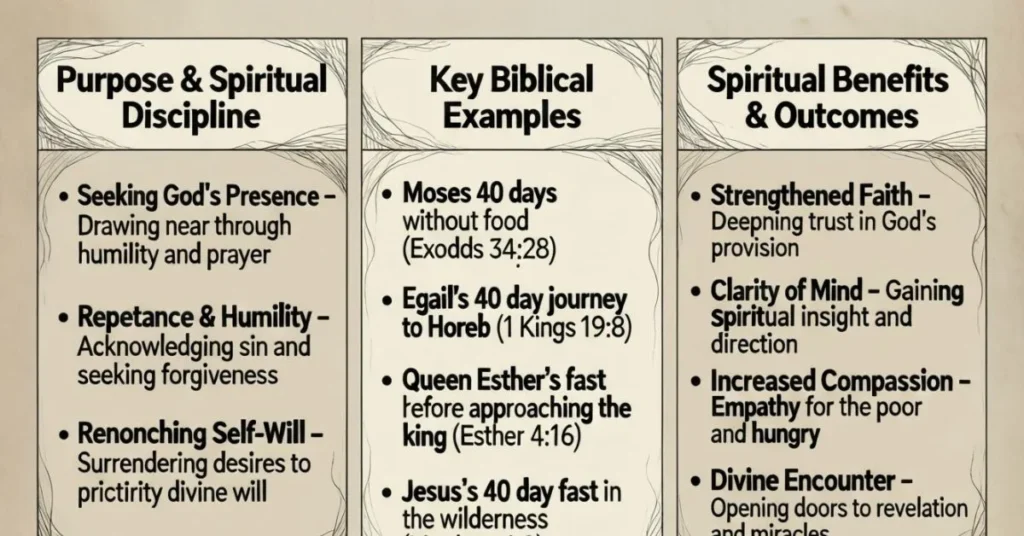
The fasting meaning in the Bible is deeply connected to humility, repentance, prayer, and dependence on God.
In Scripture, fasting is often paired with prayer. It is a way of saying, “God, I need You more than anything else.”
In the Old Testament, fasting appears during moments of crisis and repentance. In Joel 2:12, God says, “Return to me with all your heart, with fasting and weeping and mourning.”
Here, fasting is not about punishment. It is about returning to God with a sincere heart.
King David fasted when he sought God’s mercy (2 Samuel 12:16). Esther called for a fast before approaching the king to save her people (Esther 4:16).
In these moments, fasting showed complete reliance on God’s power, not human strength.
In the New Testament, Jesus Himself fasted for forty days in the wilderness (Matthew 4:2). This fast prepared Him for ministry and spiritual testing.
Jesus also taught about fasting in Matthew 6:16–18, reminding believers not to fast for attention, but for God alone. This shows that fasting is meant to be private, sincere, and faith-driven.
Biblically, fasting also carries warning meaning. When done for pride or appearance, it loses its spiritual value.
God looks at the heart, not the hunger. Isaiah 58 clearly explains that true fasting leads to kindness, justice, and care for others.
Overall, the biblical symbolism of fasting points to surrender. It is a way of emptying ourselves so God can fill us with His presence, wisdom, and peace.
Spiritual Significance and Symbolism
The spiritual symbolism of fasting is powerful and deeply personal. Fasting represents letting go of physical comfort to gain spiritual clarity. It teaches self-control, trust, and obedience.
Spiritually, fasting reminds us that God is our true source. Just as food feeds the body, God’s Word feeds the soul.
Jesus said in Matthew 4:4, “Man shall not live on bread alone, but on every word that comes from the mouth of God.” Fasting helps us feel this truth, not just understand it.
Fasting also symbolizes spiritual transformation. When believers fast, they often experience renewed focus in prayer and a deeper awareness of God’s presence.
It becomes a time of listening instead of asking, of waiting instead of rushing.
In daily life, fasting can reflect moments when we pause from noise, habits, or distractions. It may not always be about food.
Sometimes it is about stepping back from things that pull us away from God. This spiritual lesson encourages growth, healing, and maturity in Christian belief.
Through fasting, many believers experience a spiritual awakeninga gentle reminder that God is near and attentive.
Biblical Interpretations in Dreams or Real Life
When fasting appears in dreams or real experiences, it often carries a divine message. Dream interpretation within Christian faith is not about fear but about reflection and prayer.
Dreaming about fasting may suggest a call to deeper prayer or spiritual focus. It can reflect a season where God is inviting you to slow down and seek Him more intentionally.
If the dream feels peaceful, it may signal spiritual renewal and guidance.
If fasting feels difficult or heavy in a dream, it could point to inner struggles, repentance, or areas where surrender is needed. The Bible encourages believers to seek understanding through prayer, not panic.
In real life, being led to fast often aligns with moments of decision, hardship, or spiritual longing. These moments are invitations to trust God’s timing and wisdom.
Whether in dreams or daily life, fasting always draws the heart toward God’s will and purpose.
Practical Lessons & Faith Insights
Fasting teaches us to trust God fully, not partially. It encourages prayer, patience, and humility. If you feel led to fast, begin with prayer and a willing heart. Ask God for guidance, not perfection. Even a small fast done in faith carries spiritual value.
Conclusion
The fasting meaning in the Bible is about surrender, closeness, and spiritual growth.
It is not about hunger, but about hunger for God. Through fasting, believers open their hearts to God’s guidance, healing, and peace.
As you reflect on this spiritual practice, may you feel encouraged to seek God with trust, prayer, and quiet faithknowing He is always near.
Discover more articles
- Selah Meaning Bible: A Pause That Speaks to the Soul (2026)
- Slothful Meaning in the Bible:Choosing Diligence Over Delay