
When we hear the word lament, it often sounds heavy, emotional, and full of pain. But the meaning of lament in the Bible goes much deeper than simple sadness. In Scripture, lament is a powerful way God’s people express grief, sorrow, confusion, and even questions while still holding on to faith.
From the cries of David in the Psalms to the deep sorrow of Jeremiah, biblical lament shows us that God welcomes honest hearts. It teaches believers that pouring out pain before God is not weakness, but trust.
Understanding the meaning of lament in the Bible helps us see how sorrow can become prayer, and brokenness can lead to hope and healing through God’s presence.
Biblical Meaning of Lament in the Bible
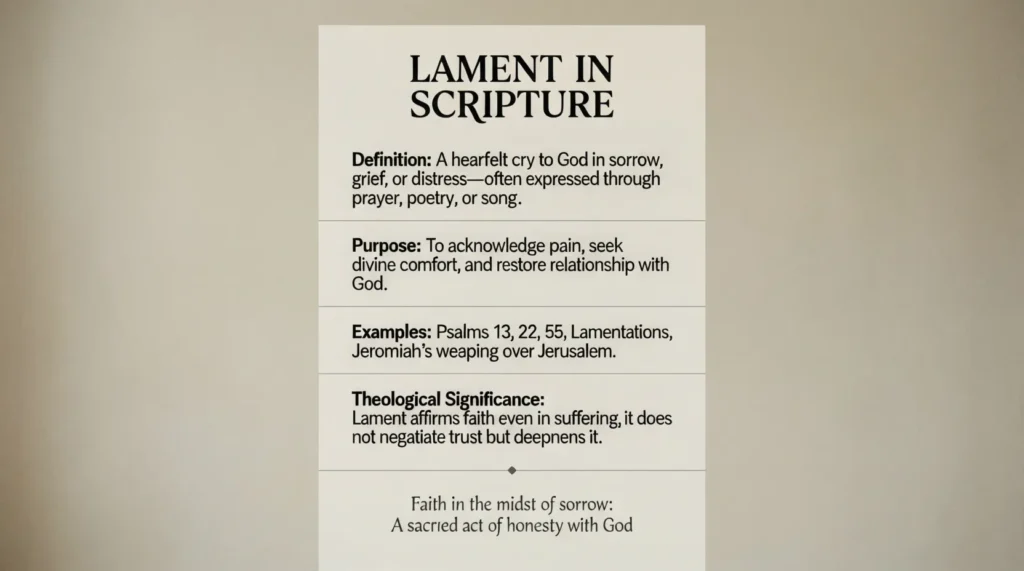
The meaning of lament in the Bible goes far beyond simple sadness. In Scripture, lament is a prayer of pain mixed with faith. It is an honest conversation with God during times of suffering.
To lament means to cry out, to grieve, to express sorrow openly before God. But biblical lament almost always includes hope. It is not complaining without trust. It is sorrow spoken to God, not away from Him.
Lament as Prayer
Many laments in the Bible are written as prayers. The Book of Psalms is filled with them.
“How long, Lord? Will you forget me forever?” (Psalm 13:1)
Here, David does not hide his feelings. He brings them directly to God. This shows that lament is an act of faith. You only cry out to someone you believe is listening.
Lament and Trust in God
Biblical lament often follows a pattern:
- Crying out in pain
- Describing the suffering honestly
- Asking God for help
- Remembering God’s faithfulness
For example:
“The Lord is close to the brokenhearted and saves those who are crushed in spirit.” (Psalm 34:18)
Even in deep sorrow, lament reminds us that God is near. It teaches believers that pain and faith can exist together.
Lament in Times of Loss and Judgment
The book of Lamentations shows another side of lament. The prophet Jeremiah laments over Jerusalem’s destruction. It is filled with grief, tears, and sorrow.
“Because of the Lord’s great love we are not consumed, for His compassions never fail.” (Lamentations 3:22)
Even in judgment, lament turns the heart back to God. It acknowledges pain while still trusting His mercy.
Is Lament Negative?
No. In the Bible, lament is not sinful. God does not rebuke people for lamenting. Instead, He preserves their words in Scripture. This shows that lament is a biblical way to process suffering.
However, lament also carries a gentle warning. If sorrow turns into bitterness or disbelief, it can harden the heart. True lament stays connected to prayer and trust in God’s character.
In short, the biblical meaning of lament teaches us that God invites honesty, pain, and tears — as long as we bring them to Him.
Spiritual Significance and Symbolism
Spiritually, lament represents a deep awakening of the soul. It is the moment when a believer realizes they cannot carry pain alone and must place it before God.
Lament as Spiritual Growth
Lament often appears during spiritual growth. When faith becomes deeper, we become more aware of life’s brokenness. This awareness leads us to cry out to God, not because He failed, but because we trust Him.
Through lament, God shapes the heart:
- It teaches humility
- It builds dependence on God
- It strengthens prayer life
God’s Presence in Lament
One powerful spiritual message of lament is this: God is present in sorrow. The Bible never says God leaves us when we cry. Instead, it shows Him drawing closer.
“My tears have been my food day and night.” (Psalm 42:3)
This verse shows God sees every tear. Lament becomes a sacred space where God meets the hurting soul.
Transformation Through Lament
Lament often leads to transformation. Many biblical laments end in praise. Pain does not disappear instantly, but the heart finds peace.
For believers today, lament can be:
- A doorway to healing
- A reminder of God’s compassion
- A step toward renewed hope
Spiritually, lament teaches us that brokenness is not the end. It is often the beginning of deeper faith.
Biblical Interpretations in Dreams or Real Life
Lament can appear not only in prayer but also in dreams or real-life experiences. Some people dream of crying, mourning, or calling out to God. Others experience a season of deep emotional heaviness.
Lament in Dreams
Dreaming of lament or crying before God often reflects:
- Unspoken grief
- A need for healing
- A call to deeper prayer
If the dream feels peaceful, it may mean God is inviting you to release pain. If it feels heavy, it may be a sign to seek God’s comfort through prayer and Scripture.
Lament in Daily Life
In real life, lament may show up as:
- Feeling overwhelmed in prayer
- Weeping during worship
- Silent sorrow before God
The Bible encourages believers not to suppress these moments. Instead, they should be offered to God as prayer.
“Cast all your anxiety on Him because He cares for you.” (1 Peter 5:7)
Whether in dreams or daily life, lament is often a divine invitation to trust God more deeply.
Practical Lessons & Faith Insights
Lament teaches us to be honest with God. It reminds us that faith does not mean pretending everything is fine. Through prayer, reflection, and trust, lament can lead to healing. When pain comes, speak to God, not away from Him, and trust His timing.
Conclusion
The meaning of lament in the Bible reveals a powerful spiritual truth: God welcomes our tears. Lament is not a sign of weak faith but a sign of deep trust.
It allows believers to bring pain into God’s presence and find hope in His love.If you are lamenting today, remember this God hears, God cares, and God is near. Let your heart rest in His faithful hands.
Discover More Articles
- Priest Meaning in the Bible : Role, Purpose & Calling (2026)
- Plunder in the Bible: Lessons & Warnings for Believers (2026)
- Bible Study Meaning: Deepening Your Connection with God (2026)