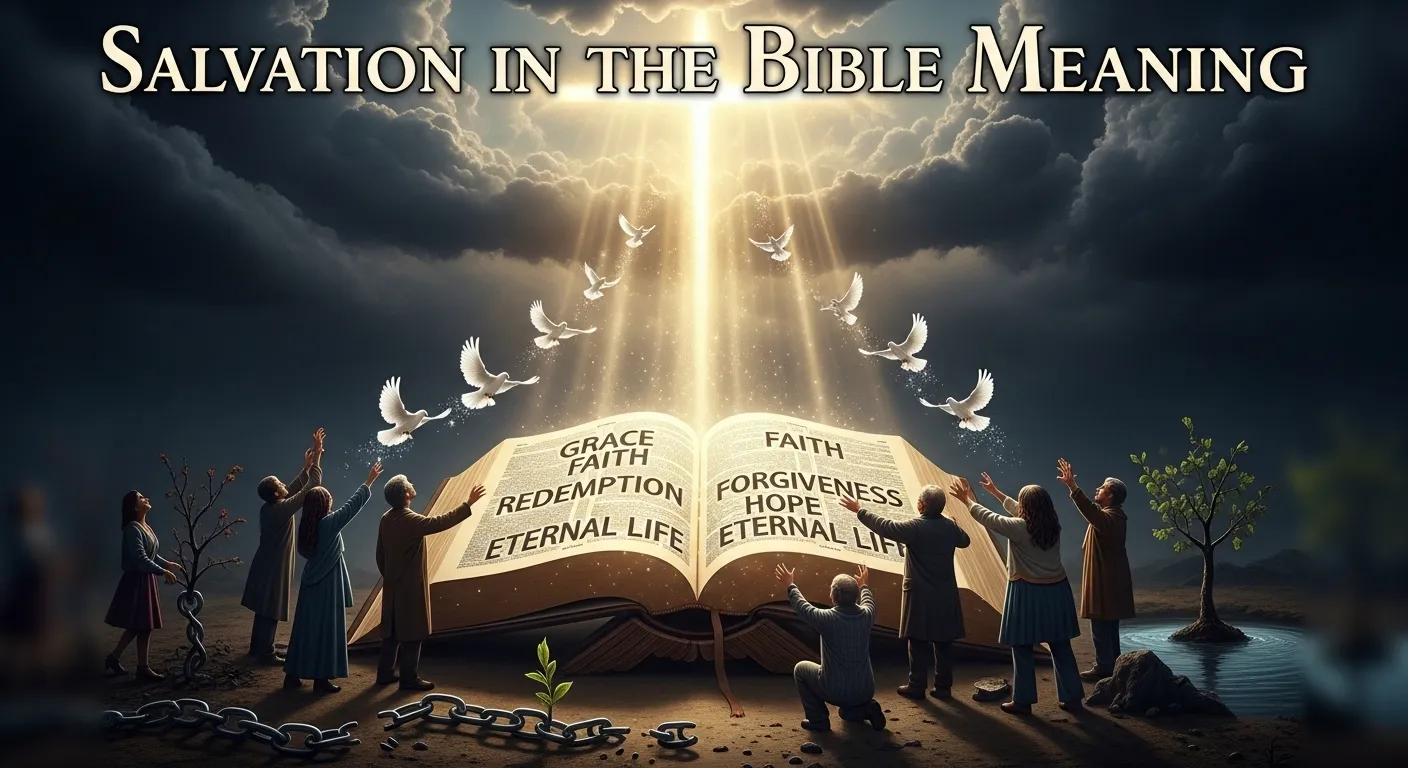
Salvation in the Bible Meaning is more than just a phrase it’s a life-changing truth I’ve come to understand deeply. When I first explored what salvation really means, I realized it’s not only about being saved, but about experiencing God’s love, grace, and purpose in a personal way.
Maybe you’re here searching for clarity, or perhaps you’re curious about how salvation applies to your life today. I’ve been there too, asking the same questions. In this article, I’ll walk you through the true biblical meaning of salvation in a simple and relatable way, so you can clearly understand what it means and why it matters.
Biblical Meaning of Salvation

In the Bible, salvation is more than a conceptit is the gift of God’s grace that rescues us from sin and brings us into His eternal light. The word “salvation” appears in both the Old and New Testaments, showing God’s consistent promise to His people.
One of the clearest verses is Ephesians 2:8-9 (NLT):
“God saved you by his grace when you believed. And you can’t take credit for this; it is a gift from God.”
This verse reminds us that salvation is a divine gift, not earned by deeds, but received through faith. It represents freedom from guilt, protection from spiritual harm, and the hope of eternal life.
In the Old Testament, salvation often symbolized deliverance from danger or oppression. For example, Psalm 34:17-18 (NLT) says:
“The Lord hears his people when they call to him for help. He rescues them from all their troubles.”
Here, salvation is not just a future promiseit is God’s presence in our struggles, offering guidance and comfort during difficult times.
Positive meanings of salvation include:
- Forgiveness of sins and spiritual renewal (Isaiah 43:25).
- Peace and hope even during life’s storms (John 14:27).
- A path toward eternal life through belief in Jesus Christ (John 3:16).
On the other hand, warnings connected to salvation encourage believers to remain faithful and trust God. Ignoring His guidance or relying solely on self-effort can block the full experience of His grace (Hebrews 2:3). Salvation, then, is both a gift and a call to live in faith.
The Bible also uses symbols to represent salvation, such as:
- The Lamb – Jesus as the sacrifice who brings freedom from sin (John 1:29).
- Water – representing purification, renewal, and baptism (Acts 2:38).
- Light – guiding believers out of darkness into God’s truth (John 8:12).
Recognizing these symbols in scripture or dreams can help Christians feel connected to God’s message, understand His plan, and grow in spiritual awareness.
Spiritual Significance and Symbolism
Salvation is not only about escaping sinit is about transformation. Spiritually, it reminds us that God is near, His love is constant, and His guidance is available in every moment.
For example, a person praying for direction might feel a gentle peace or warmth in their heart, signaling God’s presence. This simple feeling reflects the spiritual symbolism of salvation: God’s care and protection in our daily lives.
Salvation also teaches forgivenessboth receiving it and offering it to others. In everyday life, this could mean letting go of anger toward a friend or finding strength to forgive yourself. These moments are small reflections of the larger Biblical promise: that faith brings freedom, hope, and renewal.
By embracing salvation spiritually, believers learn to trust God’s timing, act in love, and grow in humility and hope. It reminds us that life’s challenges are not faced aloneGod walks with us, offering guidance and strength.
Biblical Interpretations in Dreams or Real Life
Sometimes, the message of salvation comes through dreams or real-life experiences. For example:
- Peaceful dreams of water, light, or a safe path may symbolize God’s protection and the assurance of His grace.
- Stormy dreams or moments of fear can indicate the need to rely more fully on God and seek His guidance through prayer.
In real life, moments like overcoming guilt, feeling sudden peace, or receiving unexpected help can be signs of salvation. These experiences remind Christians that God’s presence is active, loving, and always seeking to guide us toward spiritual safety.
Recognizing these messages encourages reflection, strengthens faith, and provides comfort during uncertainty. By observing God’s symbols in dreams or daily life, believers can experience His guidance and reassurance firsthand.
Practical Lessons & Faith Insights
- Reflect and pray daily: Ask God to reveal His plan and guide your steps.
- Trust in His timing: Salvation is a journey, not an instant event.
- Live in faith: Act with love, forgiveness, and hope, knowing God’s grace is always available.
Conclusion
Salvation in the Bible is God’s promise of forgiveness, protection, and eternal life. It is a gift freely given through faith in Christ, guiding believers through challenges and offering hope in every moment.
When you feel lost or uncertain, remember that salvation is a reminder of God’s love, presence, and guidance. Embrace it with faith, reflect in prayer, and trust that He is leading you toward peace and spiritual transformation.
Discover More Articles
- Mercy in the Bible Meaning: Definition, Examples, & Lessons
- Humility in the Bible Meaning : Definition, Lessons, & Power
- Pride in the Bible Meaning : Its True Meaning & Consequences