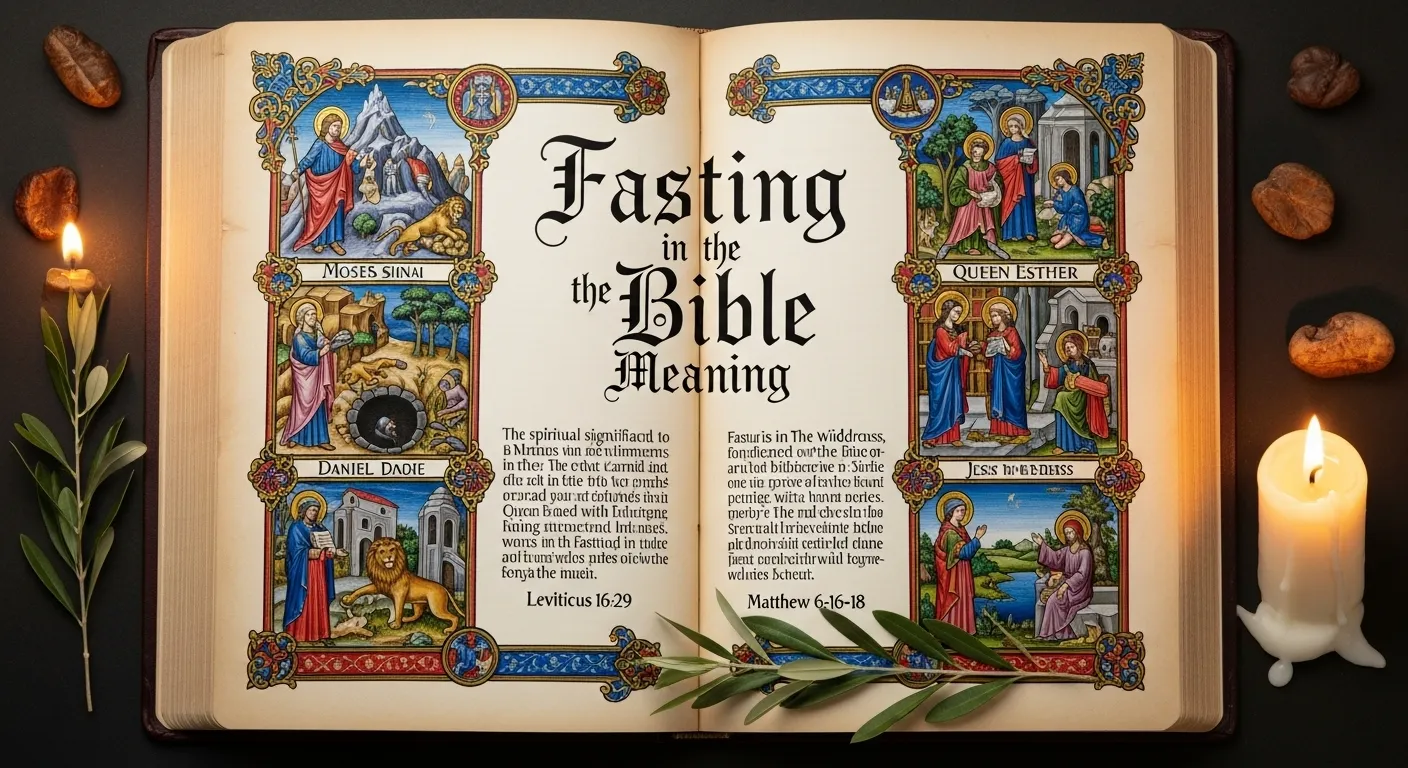
Fasting in the Bible Meaning is more than just giving up food it’s a powerful spiritual practice that speaks directly to your heart and faith journey. If you’ve ever wondered why people fast in Scripture or what it truly represents, you’re not alone.
I’m writing this especially for readers like you who want clear, simple, and meaningful biblical insights. In the Bible, fasting is deeply connected to prayer, humility, and seeking God’s guidance.
It’s not about ritual it’s about relationship. In this article, I’ll walk you through the true meaning of fasting in a way that feels personal, practical, and spiritually enriching for your everyday life.
Biblical Meaning of Fasting
In the Bible, fasting is more than going without food. It is an act of the heart, a declaration of dependence on God. Fasting often appears alongside prayer, repentance, and seeking divine guidance.
One of the clearest examples comes from Matthew 4:2 (NLT):
“After fasting forty days and forty nights, he was hungry.”
Here, Jesus fasted in the wilderness, showing us that fasting can be a time of preparation, spiritual focus, and reliance on God’s strength. Fasting is not meant to earn God’s favor but to deepen our connection with Him.
Fasting as Humility and Repentance
In Joel 2:12-13, God calls His people:
“Return to me with all your heart, with fasting, weeping, and mourning.”
Fasting is linked with repentancea way to humble ourselves, acknowledge our need for God, and turn from worldly distractions. It’s a gentle reminder that our spiritual hunger is greater than our physical hunger.
Fasting for Guidance and Wisdom
Daniel’s fast is another example. In Daniel 9:3, he says:
“I turned to the Lord God and pleaded with him in prayer and fasting.”
Daniel’s fasting was a seeking of divine wisdom. It teaches that when we feel lost, anxious, or in need of direction, fasting combined with prayer can open our hearts to God’s guidance.
Positive and Warning Meanings
Fasting carries positive symbolism:
- Spiritual awakening
- Increased faith and hope
- Deeper intimacy with God
But the Bible also warns against fasting for showing off or self-punishment. Matthew 6:16-18 reminds us:
“When you fast, don’t make it obvious… your Father, who sees what is done in secret, will reward you.”
True fasting is a personal act of devotion, not a performance for others.
Emotional Tone of Fasting
Spiritually, fasting often brings a mix of peace and challenge. It can feel uncomfortable at first, yet it’s during these moments that faith grows stronger. It’s an invitation to let go of control, trust God, and experience His presence in a profound, life-changing way.
Spiritual Significance and Symbolism
Spiritually, fasting symbolizes surrender. It is a reminder that we rely on God for strength, provision, and guidance. When we abstain from food, we are also letting go of distractions that pull us away from Him.
Fasting can also be a time of inner reflection. Think of it as a spiritual “detox,” clearing our hearts of worry, resentment, or doubt. Even small daily fastslike skipping a meal or taking a break from social mediacan renew your focus on God.
Many believers experience spiritual clarity during fasting. You may feel a soft nudge in prayer, an unexpected sense of peace, or a strengthened faith in God’s plan. These moments teach us that true nourishment comes from God, not just food.
In daily life, fasting can be as simple as pausing to pray before a meal, dedicating time to scripture, or fasting from a personal habit that distracts from your spiritual growth. Each act becomes a lesson in faith, patience, and hope.
Biblical Interpretations in Dreams or Real Life
Sometimes, fasting appears not only in practice but also in dreams or personal experiences. Seeing oneself fasting in a dream may signal a spiritual awakening or call to prayer. It can reflect a need to seek guidance from God or surrender a situation to Him.
- Peaceful fasting in dreams may indicate clarity, divine guidance, or spiritual renewal.
- Struggling or painful fasting can symbolize tests of faith, repentance, or personal growth.
In real life, feeling drawn to fasteven brieflyoften points to God’s invitation to focus on Him, trust His timing, and deepen your connection through prayer. It’s a comforting reminder that He is always present, guiding us toward hope and transformation.
Practical Lessons & Faith Insights
- Use fasting as a tool for reflection and prayer.
- Focus on humility, surrender, and seeking God’s will.
- Remember, fasting is a personal act of devotion, not a ritual to impress others.
Trust that even small efforts can bring spiritual clarity, peace, and guidance.
Conclusion
Fasting in the Bible is a symbol of faith, surrender, and divine connection. It teaches us to seek God above all, rely on His strength, and find spiritual nourishment beyond the physical.
If in dreams, prayer, or daily life, fasting is a gentle reminder that God’s guidance is always near, ready to bring hope, peace, and transformation to those who seek Him sincerely.
Let your heart remain open, your faith steadfast, and trust that God’s presence will lead you to deeper understanding and spiritual growth.
Discover More Articles
- Mercy in the Bible Meaning: Definition, Examples, & Lessons
- Humility in the Bible Meaning : Definition, Lessons, & Power
- Pride in the Bible Meaning : Its True Meaning & Consequences